Understand the Difference between Administration and Management of Cultural Projects
Many independent musicians and producers start their careers believing that to get a project off the ground or keep a studio active, a good dose of basic organisation and cash flow spreadsheets is enough. However, operational saturation and the lack of predictable financial return often take their toll quickly, generating chronic overload and directly affecting the mental health of the creative ecosystem.
When things start to fail, the automatic response is often: "I need to organise my papers better". But the real bottleneck is rarely in the day-to-day bureaucracy. The problem lies in the lack of understanding of a crucial concept for the sustainability of the creative economy: the difference between administration and management.
Although these terms are often treated as synonyms in the environment of rehearsals and traditional productions, understanding them separately is what differentiates the amateur artist — who lives putting out operational fires — from the strategic professional musician.
What is the Administration of Cultural Projects?
The administration of projects is linked to the structure, compliance, and technical maintenance of the business. Administering means ensuring that existing resources are organised and that the rules of the game are strictly followed.
In the routine of a musician or a music EdTech, purely administrative activity encompasses:
Fill in the mandatory items and account for public notices or funding grants (such as the formal criteria of FAPESP).
Issue invoices and pay for software licenses or cloud servers.
Organise the schedules for synchronous classes and manage recording agendas.
In summary, administration looks to the present and inward. It ensures that the "machine" does not stop functioning due to legal or tax issues. However, focusing exclusively on administration turns the professional into a mere executor of repetitive tasks, limiting their scale and long-term vision.
What is Cultural Project Management?
Management, on the other hand, is focused on strategy, leadership, innovation, and the generation of continuous value. While administration maintains existing processes, the management of cultural projects seeks to optimise resources to achieve new revenue targets, open new traction channels (such as closing B2B partnership contracts with unions or partner schools), and expand the brand in the market.
Strategically managing a music business involves:
Business Modelling Culture: Thinking about hybrid monetisation flows (such as recurring SaaS subscriptions or modular e-commerce of info products), reducing blind dependence on public notices.
Market Vision and ROI: Allocate budgets for paid traffic in a surgical manner (dividing investments between attracting cold audiences and remarketing campaigns focused on risk reversal) to maximise Return on Investment.
Agility in Scope: Pivot operational strategies quickly when traditional distribution channels saturate, adopting continuous improvement frameworks and weekly retrospectives.
Management looks to the future and outward. It seeks to create defensible competitive advantages and build a strong technical and commercial barrier for its creative portfolio.
How to Unify Administration and Financial Management in your Art?
The big mistake that overloads the exhausted polymath is trying to execute these two disciplines in a disconnected manner. When you use isolated tools — a spreadsheet for cash flow, another generic platform for marketing, and a separate e-learning system — your mental load multiplies.
To achieve a predictable and asset-light growth model, your administration and financial management need to operate within a unified operating system. Technology should function as an automated mediation: while the software takes care of the administrative flow of collections and automatic subscriptions, your brain is free to focus on public relationship management, artistic creation, and sales intelligence.
Learning to delegate bureaucracy to integrated systems and taking on the role of manager of your own career is the definitive step to reduce operational costs, optimise revenues, and shield your mental health against the paralysis of the traditional market.
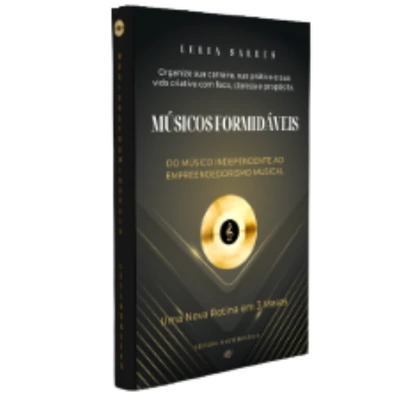
Discover the Exact Method to Transform your Routine without Stress!
Do you want to understand in practice how these disciplines of agility, marketing, and finance work perfectly integrated in the creative job market?
Click here to see the Complete Syllabus and the Subjects of Formidable Musicians